Meat Blast Freezing
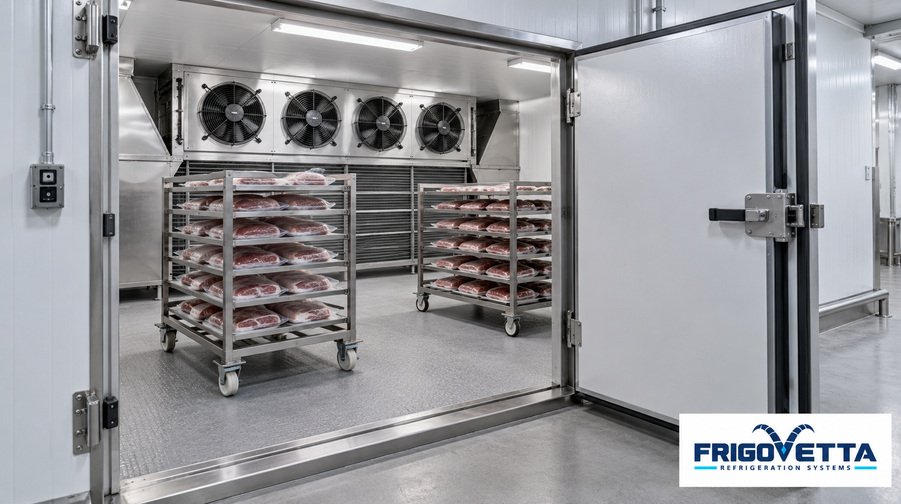
Meat blast freezing uses moving, low-temperature air to remove heat from meat and bring it to a specified frozen condition before storage or distribution. The process depends on more than a cold room setpoint. Cut thickness, packaging and the route air takes through the load all affect how quickly the last part of a batch freezes.
Frigovetta Refrigeration System designs, manufactures and installs batch freezing rooms as part of its meat cold storage projects. Each installation is developed around the processor’s product formats, incoming conditions and required production schedule.
Start With the Pack to Be Frozen
A shallow tray of portions and a deep carton of boneless meat should not be assigned the same freezing cycle simply because they contain the same total weight. Heat must travel from the product’s interior through the surrounding meat and packaging before the air can carry it away.
The design brief should specify the thickest products, carton dimensions, fill weights, liners and starting temperatures. Representative pack samples help define the duty more accurately than daily tonnage alone. If packaging changes later, the established freezing cycle may need to be reassessed.
Direct Air Through the Load
Cold air can follow open passages around a tightly packed load while leaving the interior poorly served. Adding refrigeration capacity does not correct a loading arrangement that prevents air from reaching the intended surfaces.
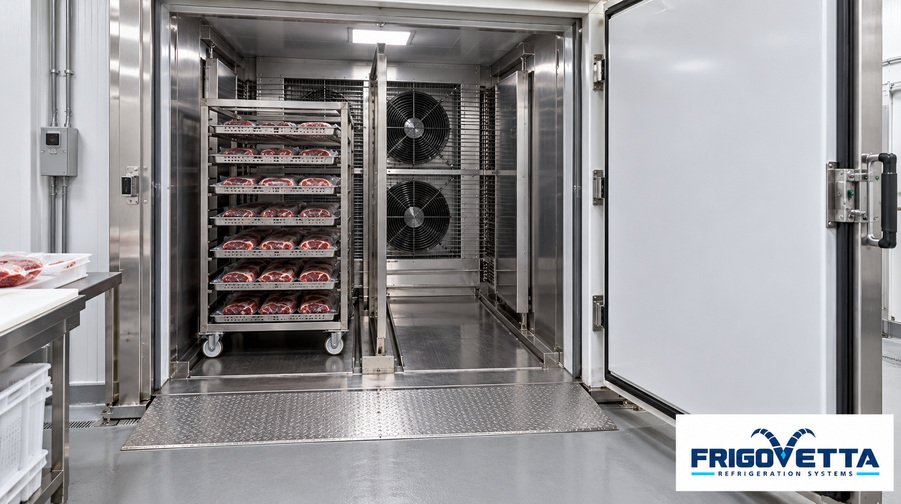
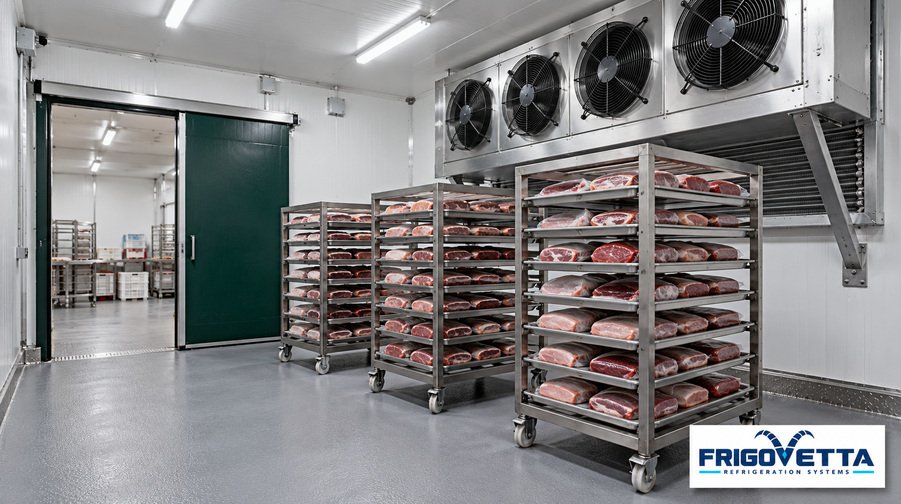
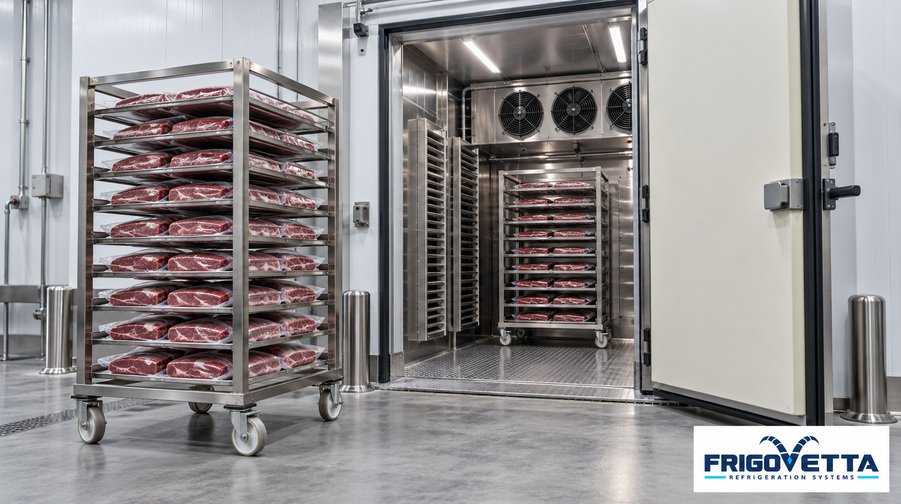
Rack positions, trolley spacing and any channels between carton layers need to be planned as part of the freezer. Depending on the arrangement, baffles or air guides may be required to reduce bypass. Blast freezer refrigeration systems should be selected together with this airflow layout, with loading instructions that operators can reproduce from batch to batch.
Define When Freezing Is Complete
A low air temperature on the controller does not show that the product has finished freezing. The release criterion should specify the required product temperature and how it will be verified at representative slow-cooling positions within the load.
Commissioning trials should use the agreed product format, starting temperature and loading pattern. Product probes and recorded time–temperature data can then support a validated operating cycle. Unusually large packs, heavier loads or different starting conditions require assessment rather than an assumption that the previous cycle remains suitable.
Freezing also does not make contaminated meat safe. Product acceptance, hygienic handling and the processor’s food safety controls remain essential before and after the cycle.
Allow Time Between Batches
A production plan based only on freezing hours can overstate daily output. Loading, unloading, cleaning and defrosting also occupy time. The project schedule needs to show when each activity occurs and how the next batch will be held while the freezer is unavailable.
Moisture entering with products and door openings can form frost on the cooling coil, affecting airflow and performance. Cold room evaporators specified for blast-freezing duty need suitable defrost and drainage arrangements. Controls should coordinate these functions with the batch schedule, allowing the room to return to the required condition before the next cycle.
Build for Low-Temperature Operation
The enclosure and access details must suit the freezer’s operating conditions. Cold room panels, joints and penetrations need coordinated insulation and vapour-control detailing. The floor construction also requires assessment for insulation, loading and protection against subfloor freezing where applicable.
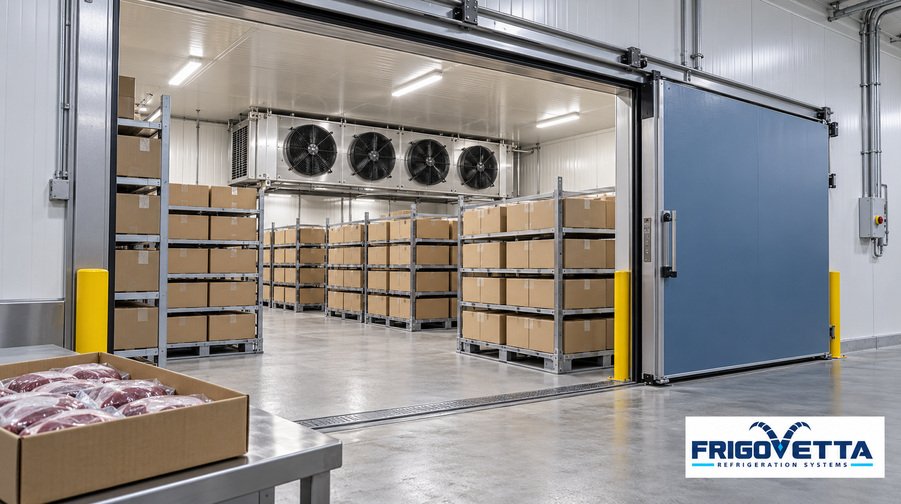
Freezer versions of sliding cold room doors can provide access for the selected handling equipment. Door heating, sealing and emergency-release provisions should be specified alongside the opening size and traffic pattern. These details need to work together through repeated loading and freezing cycles.
Connect Freezing With Frozen Storage
Completed batches should move into suitable frozen storage without unnecessary delay. Using the blast room for long-term holding occupies capacity intended for the next production batch, so downstream storage space belongs in the initial project brief.
Frigovetta’s turnkey cold storage solutions coordinate the freezing room, refrigeration, controls and transfer to the agreed storage area. To begin planning, provide the product and packaging details, target batch size, incoming temperature and required frozen condition, together with the available operating hours.
Galeri