Offal Cold Storage
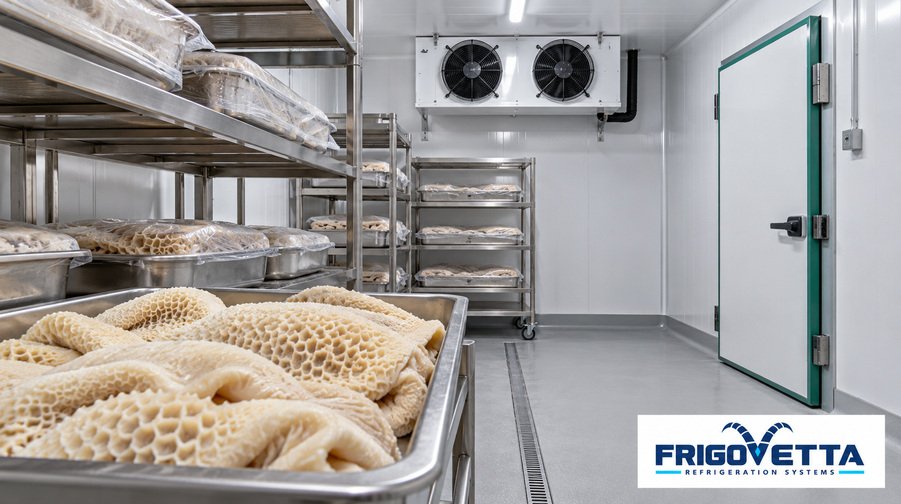
Offal cold storage provides controlled refrigerated space for edible organs and other edible animal parts awaiting packing, processing or dispatch. Liver, kidneys, hearts and tongues differ in size, surface characteristics and handling needs. Planning them as one uniform load can overlook the way individual products are prepared, contained and cooled.
Frigovetta Refrigeration System designs, manufactures and installs offal refrigeration facilities within its meat cold storage projects. The starting point is a clear product list and process description, including whether the room receives warm offal for chilling or product that has already reached its specified storage temperature.
Separate Products by Processing Stage
Edible offal needs a defined route from collection through preparation to refrigerated holding. Cleaned products should be protected from contamination associated with uncleaned digestive organs, used containers and waste movements. The necessary room separation and handling controls depend on the products and the site’s hygiene plan.
A dedicated storage area can make these boundaries easier to manage, but refrigeration alone does not establish hygienic separation. Door positions, trolley routes and container return arrangements must support it. The layout should also provide an identifiable location for batches awaiting inspection or release, keeping them apart from available stock.
Establish the Chilling Duty
Freshly collected offal introduces a different refrigeration load from previously chilled trays arriving for storage. Incoming temperature, batch weight and arrival frequency need to be defined before equipment is selected. If chilling takes place in the room, the required cooling performance must be established for the actual product and loading arrangement.
Cold room refrigeration systems are sized around that duty and the surrounding operating conditions. A holding room should not be treated as a rapid chiller without checking its capacity. Chilling and storage limits must follow the processor’s validated procedures and the requirements applicable to the product and destination market.
Check the Product Inside Containers
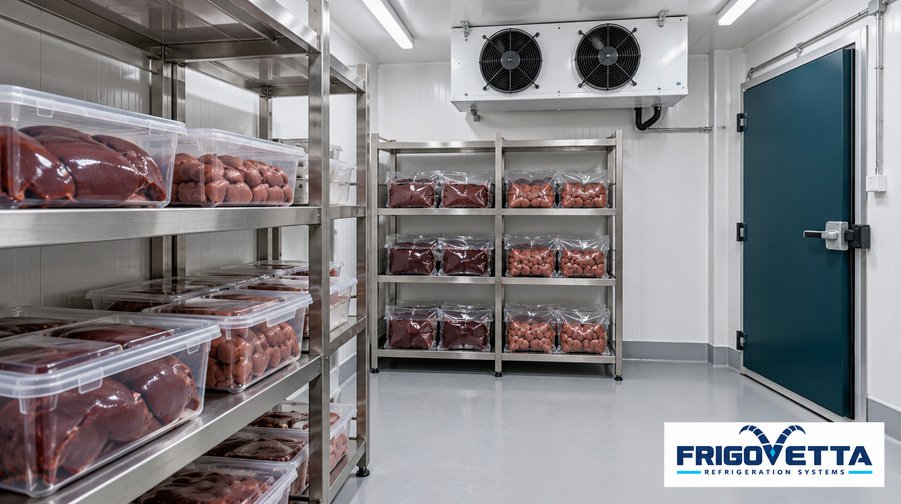
A deep container of closely packed organs does not cool in the same way as a shallow, spaced arrangement. Container material, fill depth, liners and lids can all affect heat transfer. An air temperature reading near the door cannot confirm that the slowest-cooling part of a batch has reached its required condition.
Where the installation includes chilling, representative product checks should cover the intended container and loading patterns. Changes to fill weight or packaging need reassessment. For previously chilled goods, the priority is maintaining suitable conditions while allowing access for inspection, identification and stock handling.
Keep Airflow and Drips Under Control
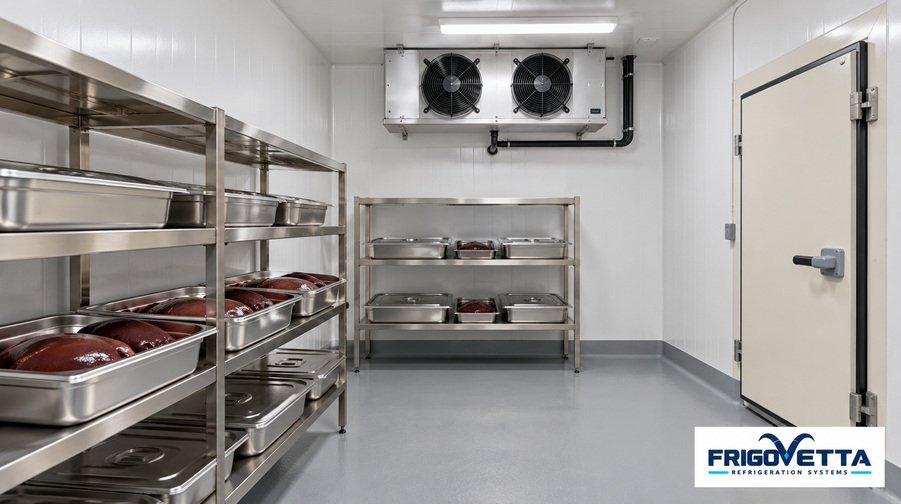
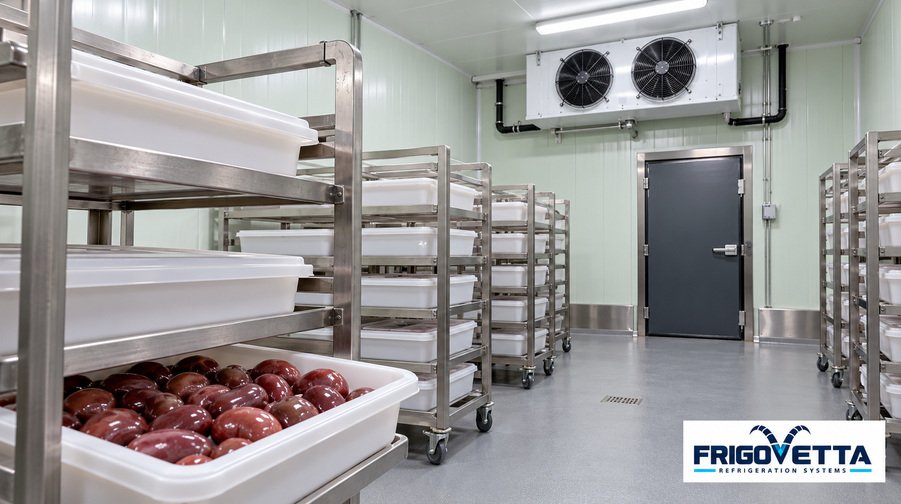
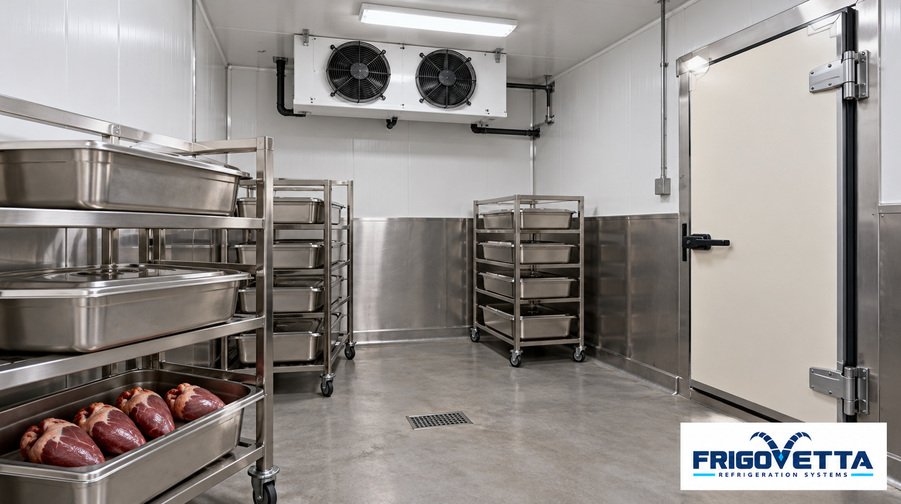
Trolleys and shelving should leave the planned air paths open without allowing drips from one load to contaminate another. Containers must suit the product and process, with arrangements for managing leakage and keeping floors accessible for cleaning.
Cold room evaporators need to serve the occupied storage positions without directing excessive airflow onto exposed products. Drain trays and condensate lines should be accessible for maintenance. Where stainless steel cold room shelving is selected, shelf spacing, load capacity and compatibility with the cleaning regime must match the trays or containers actually used.
Build Cleaning Into the Layout
Offal handling can leave residues around trolley wheels, container bases and transfer points. These areas need to remain reachable after the room is equipped. Storage capacity should allow for access rather than rely on filling every available floor space.
Cold room panels form the insulated enclosure, with joints and junctions detailed for the specified cleaning method. Floor finishes, drainage and door thresholds require coordination with the building works. Cleaning equipment and chemicals should be compatible with the installed materials and the site’s sanitation procedures.
Define the Destination of Each Batch
Some products leave chilled; others move to a separate freezing process. That route should be established before the room is sized, since collection frequency and waiting time affect the number of storage positions needed.
For a proposal, provide product types, batch sizes, incoming conditions, container dimensions and the planned cleaning schedule. Frigovetta’s turnkey cold storage solutions bring together the enclosure, refrigeration and agreed handling interfaces around those requirements, with commissioning checks suited to the intended chilling or holding operation.
Galeri