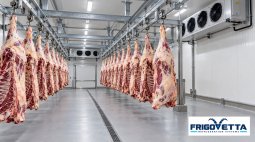
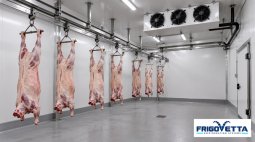
Lamb and Goat Chilling
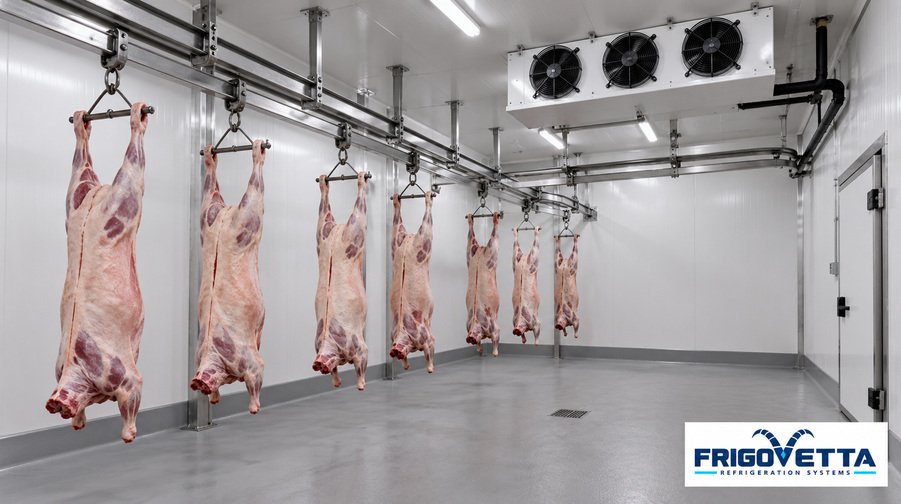
Lamb and Goat Chilling
Lamb and goat chilling needs to accommodate differences between carcasses arriving on the same production day. Weight, fat cover and body shape affect heat removal, while exposed surfaces can lose moisture during the process. A room must provide suitable conditions for the actual mix of animals handled, rather than follow a programme developed for a different carcass type.
Frigovetta Refrigeration System designs, manufactures and installs small-ruminant chilling facilities within its meat cold storage projects. Each installation is planned around the processor’s throughput, hanging arrangement and validated requirements for transfer to cutting, storage or dispatch.
Define the Carcass Range
Daily tonnage is only one part of the design brief. A load containing many lighter carcasses can occupy the rails differently from the same total weight made up of heavier animals. The number of hanging positions, spacing and rate of loading therefore need to be assessed alongside refrigeration capacity.
Lamb and goat carcasses should not be assumed to have identical cooling behaviour. Even within one species, variations in weight and fat cover can affect the temperature profile. Recording the expected range helps establish which loads can follow a common programme and where separate operating conditions may be needed.
Protect Lean and Exposed Surfaces
Surface evaporation contributes to chilling but also reduces carcass weight. Where fat cover is limited, exposed tissue needs particular attention when selecting air conditions and the duration of treatment. Excessive drying can affect saleable yield and surface appearance.
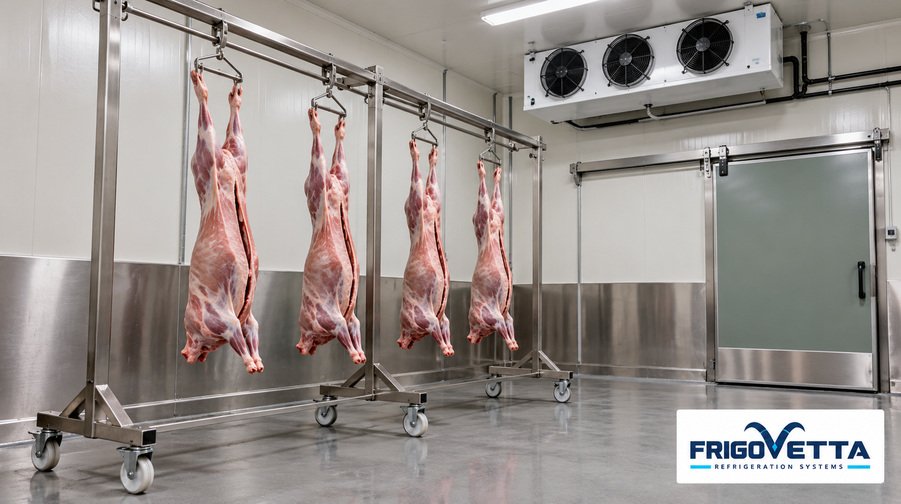
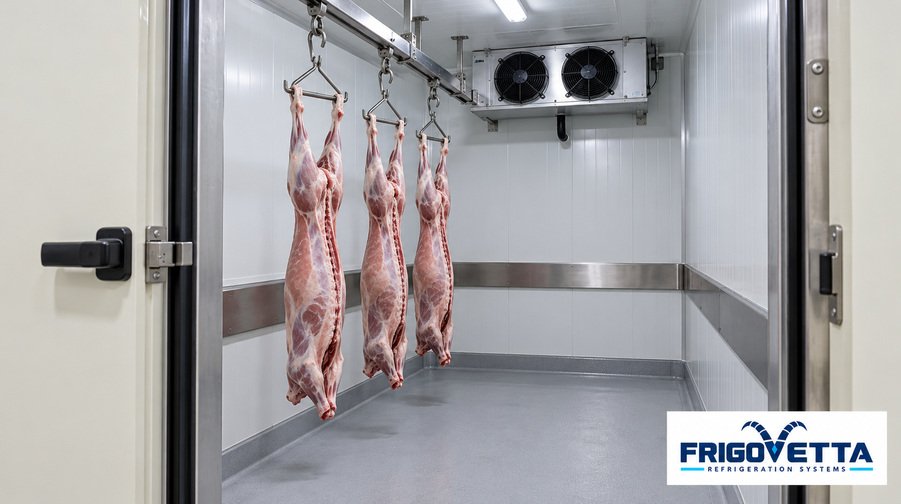
Cold room evaporators are arranged to distribute air across the occupied rail positions. The design should avoid concentrating the strongest airflow on a few exposed carcasses while leaving others sheltered. Fan control, room temperature and humidity management are considered together, with adjustments based on the validated process.
Cooling must also account for rigor development. Susceptible muscles can undergo cold shortening if cooled too far before rigor develops. The operating programme should reflect carcass characteristics and any processing interventions used by the plant.
Organise Loads by Batch
A room receiving carcasses over several hours contains products at different points in the chilling cycle. Clearly identified rail sections and loading records help operators distinguish earlier arrivals from newly loaded stock.
Where practical, batches with comparable chilling requirements can be assigned to defined positions. This supports inspection and temperature checks without assuming that every carcass has followed the same temperature history. Carcass weight or arrival time alone should not determine release; the specified product conditions must also be verified.
The unloading route should allow completed batches to move forward without repeatedly relocating carcasses still undergoing chilling.
Make Each Hanging Position Usable
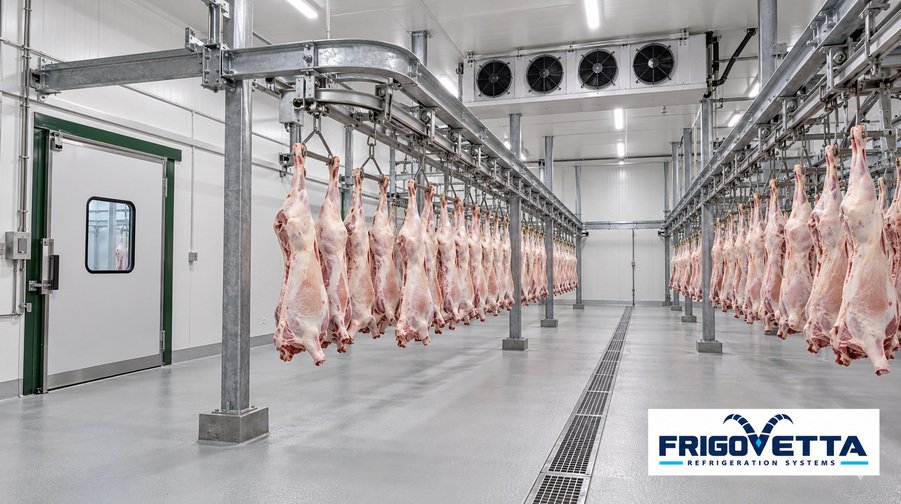
Available rail length does not automatically equal usable storage capacity. Hooks, bends, junctions and doorway transfers can restrict how many carcasses fit while maintaining appropriate separation and air access.
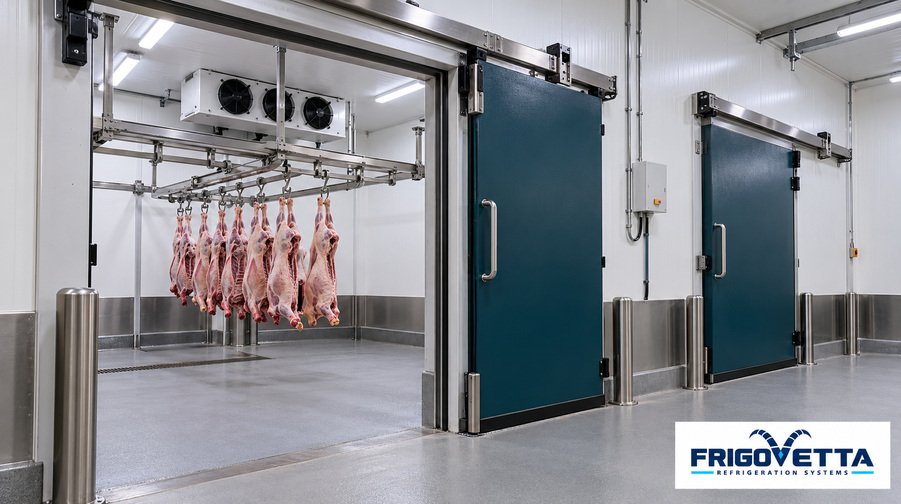
Where a rail crosses the room opening, monorail cold room doors are coordinated with its position, clearance and sealing detail. The layout should accommodate the expected carcass dimensions without contact with walls, floors or door surfaces.
Cold room panels provide the insulated enclosure, while the hanging system requires suitable structural support. Inspection, cleaning and maintenance access must remain practical when the planned load is in place.
Match Refrigeration to Loading Patterns
Cold room refrigeration systems are selected for the incoming heat load, loading pattern and required chilling cycle. A steady sequence of arrivals and a concentrated load at the end of a shift can place different demands on the installation.
Performance assessment should cover representative carcass sizes and rail positions. Product-temperature checks, supported by room monitoring, help confirm that the process meets its agreed requirements. A change in the proportion of lighter or heavier carcasses may require reassessment even when total daily tonnage stays the same.
Plan the Next Transfer
The room schedule should include loading, chilling, unloading and cleaning. Once carcasses meet the specified release conditions, their route to chilled holding or cutting should limit unnecessary exposure and delays.
Our turnkey cold storage solutions coordinate the agreed refrigeration, room construction, doors and interfaces with the rail operation. Share the lamb and goat carcass ranges, hourly throughput, rail layout and planned production cycle so the installation can be designed for your site’s actual workload.
Galeri