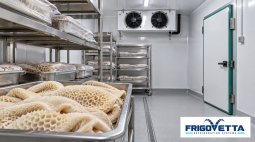
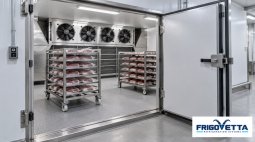
Beef Carcass Chilling
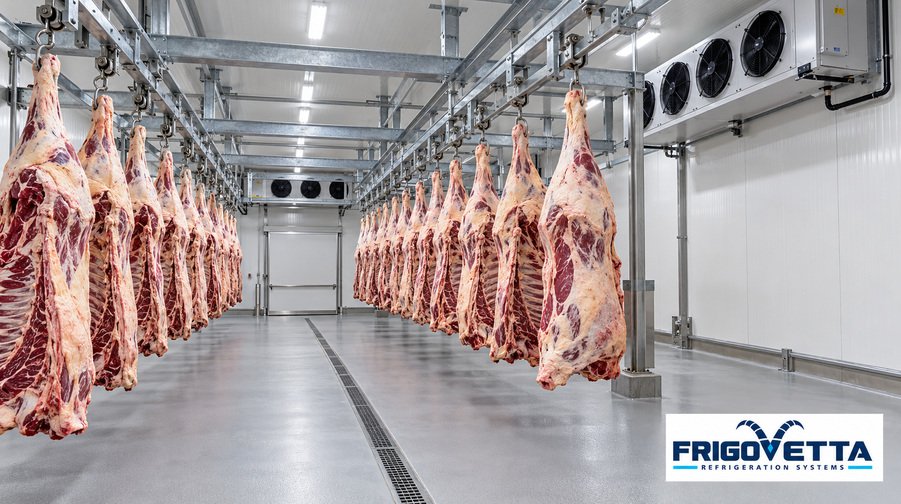
Beef Carcass Chilling
Beef carcass chilling removes heat after slaughter and dressing, preparing the meat for chilled holding, cutting or dispatch. The refrigeration duty depends on more than the number of carcasses that fit inside a room. Carcass weight, fat cover, entry temperature and loading schedule all influence how the cooling process develops.
Frigovetta Refrigeration System designs, manufactures and installs carcass chilling facilities as part of its meat cold storage projects. The room, refrigeration equipment and access arrangements are coordinated with the processor’s production flow and validated chilling programme.
Design Around the Slaughter Schedule
A plant loading carcasses continuously through a shift creates a different demand from one filling a chamber in a short period. The project assessment should establish the daily throughput, individual load sizes and the time available before carcasses move to the next stage.
Warm incoming product, door openings and the heat entering through the building all contribute to the refrigeration load. Cold room refrigeration systems are selected against these duties and the required operating cycle. A room designed only to hold already chilled carcasses should not be assumed capable of handling the same weight of warm meat.
Room scheduling also needs to leave time for unloading and cleaning before the next production cycle.
Leave Space Around Each Carcass
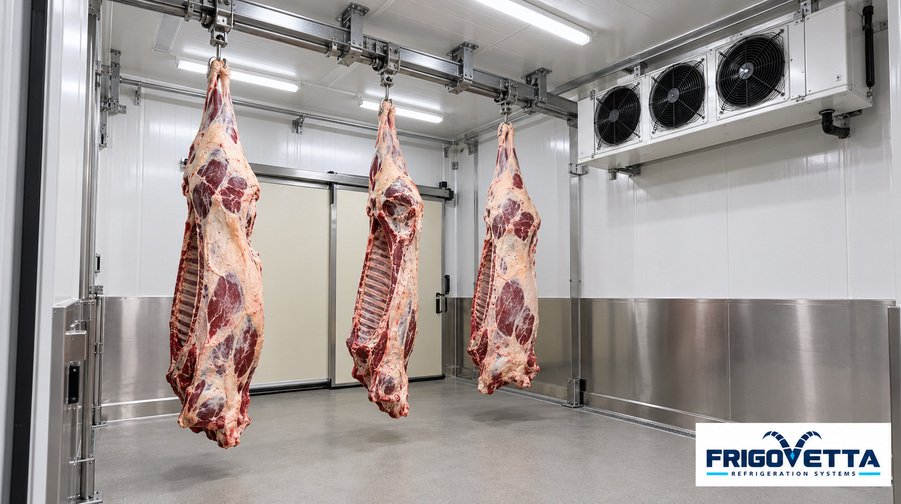
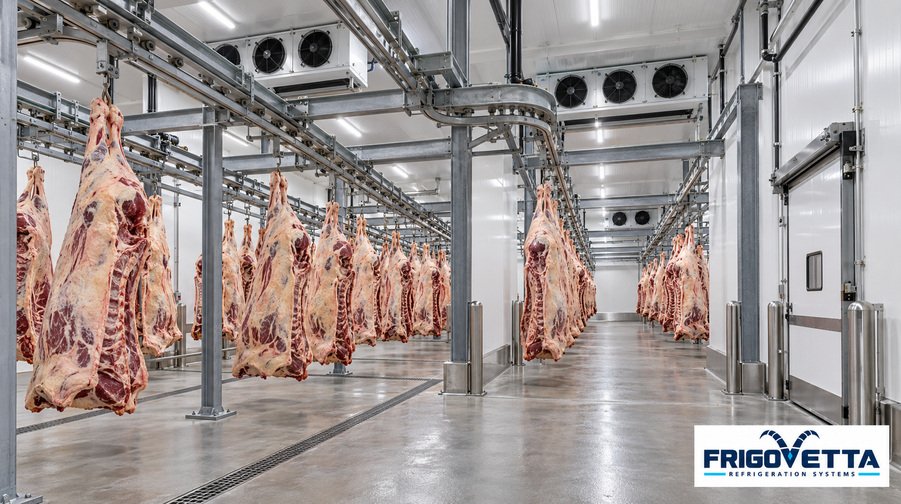
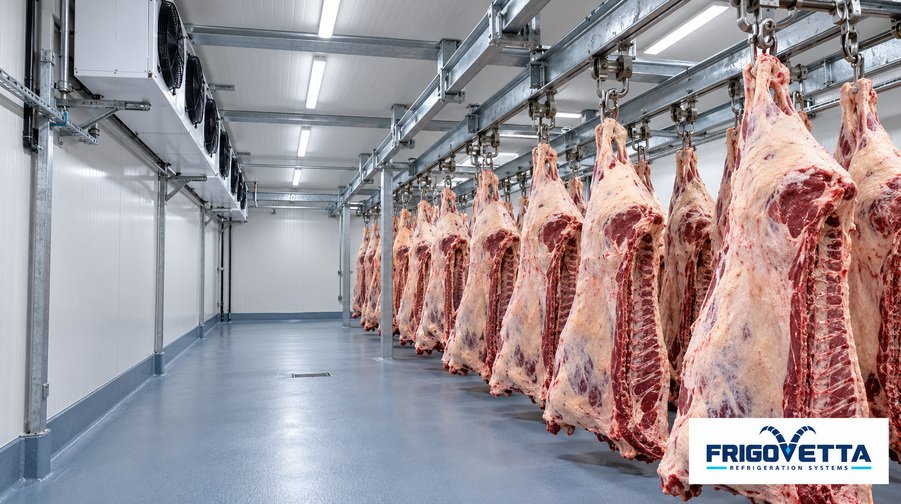
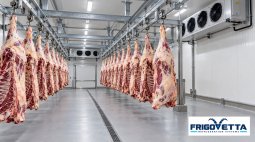
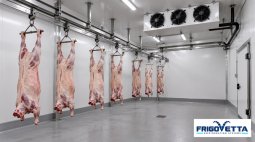
Rail spacing and suspension height determine how carcasses occupy the chamber. Closely packed sides can restrict airflow, while unsuitable positioning may leave exposed surfaces cooling differently from sheltered areas. The loading plan should maintain appropriate separation between carcasses and clearances from walls and equipment.
Cold room evaporators are positioned with the loaded rail layout in mind. Air must reach the product rather than take an easy route around it. Fan operation and defrost arrangements are coordinated with the chilling cycle so that the intended conditions can be maintained during production.
Rail supports require structural assessment for the suspended loads. The insulated enclosure should not be assumed to carry the rail system without a specifically engineered design.
Balance Cooling With Meat Quality
Chilling needs to control the time-temperature history of the carcass while limiting unnecessary surface dehydration. Air speed, temperature and humidity influence both heat removal and evaporative weight loss. Higher airflow is therefore not automatically the best choice throughout the complete cycle.
Very rapid cooling of susceptible beef muscles before rigor develops can cause cold shortening and contribute to toughness. The appropriate programme depends on the process, carcass characteristics and any interventions used by the plant. Room settings should follow the processor’s validated procedure rather than a generic instruction to make every carcass colder as quickly as possible.
Verify the Product Temperature
Room-air readings show how the refrigeration environment is behaving; they do not establish that the warmest parts of every carcass have reached the required condition. Product-temperature monitoring should use defined locations and representative carcasses, with the sampling plan appropriate to the operation.
Commissioning should assess the loaded process against agreed acceptance criteria, including the expected range of carcass sizes and operating conditions. Records then help the operator identify whether changes in throughput or loading pattern require reassessment.
Connect the Chiller to Production
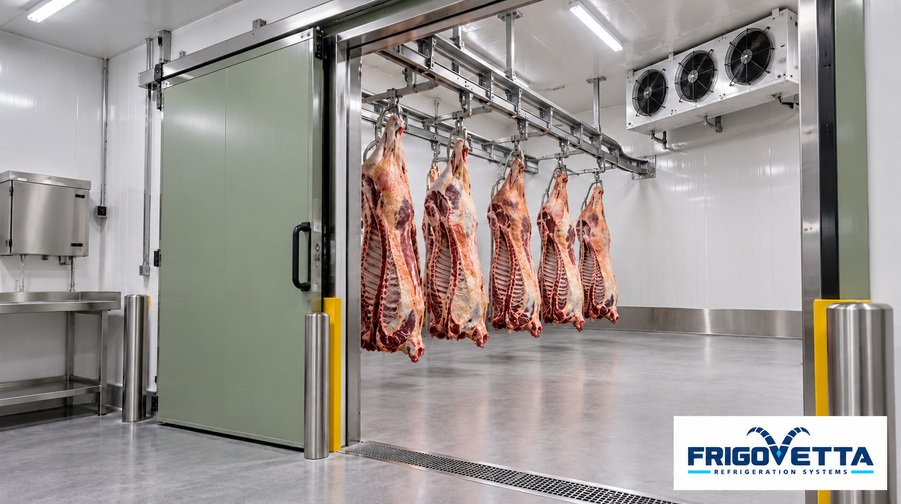
Where overhead rails pass through the doorway, monorail cold room doors are selected with the rail interface, opening clearance and sealing arrangement in view. Transfers to chilled holding or cutting areas should fit the production sequence without leaving doors open unnecessarily.
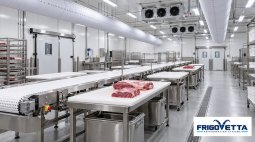
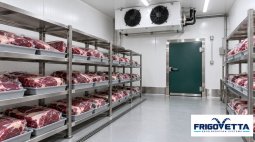
Cold room panels form the insulated enclosure, with finishes and junction details selected for the cleaning environment. Drainage, condensate management and service access are incorporated into the layout, including measures to prevent condensate dripping onto exposed meat.
Plan Your Carcass Chilling Project
Our turnkey cold storage solutions are developed from the actual carcass flow through the plant. Provide the expected carcass weights, hourly and daily throughput, rail arrangement, incoming temperatures and required chilling schedule. These inputs define the refrigeration duty, room layout and interfaces with subsequent processing or storage.
Galeri