Sliding Cold Room Doors
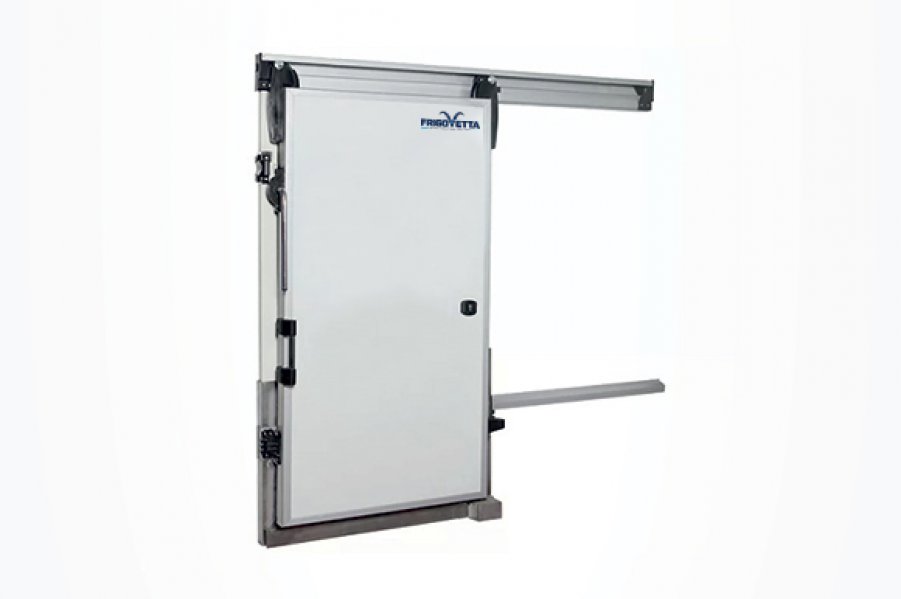
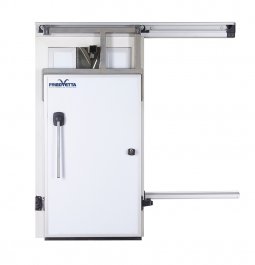
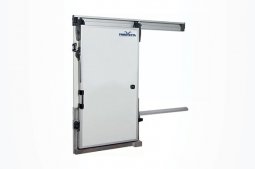
Sliding cold room doors provide insulated access to chilled storage, freezer rooms and temperature-controlled processing areas. The door leaf moves horizontally beside the entrance, keeping the approach clear of a hinged door’s swing arc.
Frigovetta sliding cold room door configurations address different storage temperatures and entrance layouts. Chiller and freezer specifications define the thermal application, while single-slide and bi-parting arrangements describe how the doorway opens.
Sliding Chiller Doors — Positive-Temperature Storage
Chiller sliding doors serve refrigerated spaces typically operating above 0°C (32°F). They provide access to chilled storage rooms, food preparation areas and refrigerated handling spaces.
An insulated leaf helps limit heat transfer when closed. Perimeter and floor seals help restrict air exchange around the opening, supporting separation between the refrigerated room and adjoining areas.
For walk-in cold rooms, the door specification should match the room temperature, ambient conditions and access frequency. Clear opening dimensions must accommodate daily product movement, while available wall space determines the appropriate sliding arrangement.
Sliding Freezer Doors — Frozen Storage
Freezer sliding doors are designed for frozen-storage applications below 0°C (32°F). Their insulation and sealing arrangements must suit the temperature difference between the freezer and surrounding areas.
For applications below −18°C (−0.4°F), Frigovetta equips freezer doors with heaters to help prevent the seals from freezing. This provision forms part of the low-temperature door specification.
When selecting doors for walk-in freezers, consider the required operating temperature, ambient humidity and frequency of passage. These conditions influence the thermal and frost-control requirements around the entrance.
Doors for Blast-Freezing Rooms — Around −40°C
Blast-freezing rooms require a door specification suited to more demanding low-temperature conditions. For rooms operating around −40°C (−40°F), Frigovetta uses a double-gasket arrangement alongside door heating.
The double-gasket configuration forms part of the sealing design for this application. Heating helps prevent the seals from freezing during low-temperature operation.
For blast freezer rooms, the complete door assembly and opening arrangement should be selected against the project’s operating conditions. An ordinary freezer designation alone does not establish suitability for blast-freezing service.
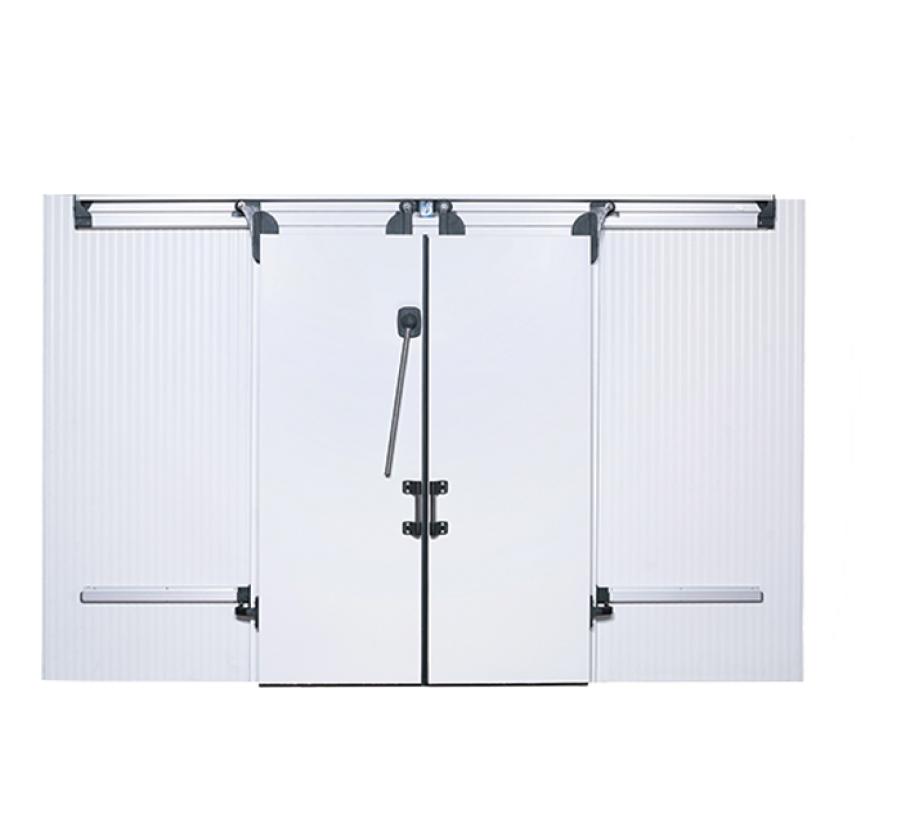
Bi-Parting Sliding Doors — Two-Leaf Opening
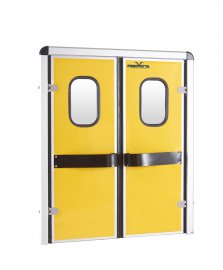
Bi-parting sliding doors use two leaves that move away from the centre in opposite directions. This distributes the required parking space between both sides of the entrance rather than placing a full-width leaf on one side.
The arrangement can suit wide openings where one side cannot accommodate a single sliding leaf. Both sides still require sufficient wall space and track clearance.
Bi-parting describes the opening configuration, not a separate temperature class. The door’s insulation, seals and heating provisions must match its intended chiller, freezer or other specified low-temperature application.
Opening dimensions should accommodate the largest load passing through the entrance, including handling equipment and the necessary clearance.
Installation and Project Requirements
Coordinate the door opening with insulated cold room panels, floor levels and the supporting structure. Installation planning should provide adequate sliding clearance and access to components requiring inspection or maintenance.
Send Frigovetta the required room temperature, ambient conditions, clear opening dimensions and traffic details to discuss a suitable sliding cold room door configuration.
Temperature and Configuration Overview
| Selection Point | Chiller Sliding Doors | Freezer Sliding Doors | Blast-Freezing Room Doors |
|---|---|---|---|
| Intended application | Chilled storage and refrigerated work areas | Frozen storage | Blast-freezing rooms |
| Temperature information | Typically above 0°C (32°F) | Below 0°C (32°F) | Around −40°C (−40°F) |
| Thermal specification | Matched to chilled-room conditions | Matched to the required freezer conditions | Matched to blast-freezing conditions |
| Heating provision | Assessed against project conditions | Door heaters used for applications below −18°C (−0.4°F) | Door heating |
| Sealing arrangement | Selected for the application | Selected for freezer conditions | Double-gasket arrangement |
| Opening configuration | Selected according to the model and entrance layout | Selected according to the model and entrance layout | Confirmed for the specified low-temperature design |
Temperature information describes the intended applications and stated heating provisions. Exact operating limits must be established for the selected door model.
| Feature | Single-Slide | Bi-Parting |
|---|---|---|
| Door leaves | One | Two |
| Opening movement | Leaf slides to one side | Leaves slide in opposite directions from the centre |
| Parking space | Required on the selected opening side | Distributed between both sides |
| Installation consideration | Sufficient lateral space for the full leaf | Sufficient lateral space and track clearance on both sides |
| Temperature suitability | Determined by the door specification | Determined by the door specification |
- Clear approach space: Horizontal movement avoids a door leaf swinging into the access route.
- Insulated separation: The insulated leaf helps limit heat transfer through the closed door.
- Application-specific selection: Chiller, freezer and blast-freezing specifications address different operating conditions.
- Seal-freezing prevention: Door heaters help prevent seals from freezing in applications below −18°C.
- Double-gasket sealing: Blast-freezing room doors use a double-gasket arrangement alongside heating for applications around −40°C.
- Flexible entrance layouts: Single-slide and bi-parting arrangements accommodate different lateral-space requirements.
Galeri
.pdf.png)