Poultry Blast Freezing
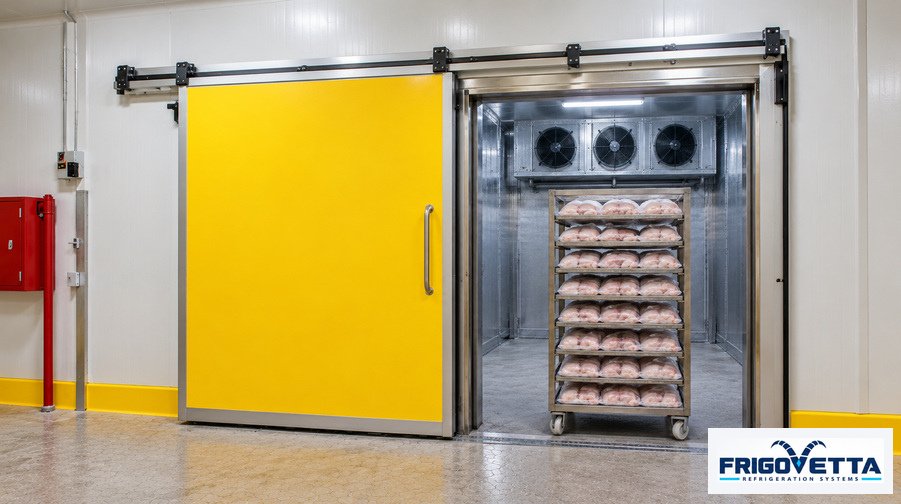
Poultry blast freezing removes heat from chicken and turkey using low-temperature air circulated through a planned load. Whole birds, packed portions and cartons of boneless meat respond differently during freezing. A batch programme needs to reflect those differences so that products reach their specified frozen condition before transfer to storage.
Frigovetta Refrigeration System designs, manufactures and installs batch freezing rooms within its poultry cold storage projects. The project begins with the products leaving the packing operation, their starting temperatures and the quantity that must be frozen within the available production schedule.
Group Products by Freezing Duty
A small tray of chicken portions should not automatically share a cycle with a large whole turkey. Product thickness, shape and packaging affect the path heat must travel before it reaches the moving air. Even within a single product line, different bird weight ranges or carton fill weights can change the required freezing time.
The loading programme should identify which formats can be processed together under a validated cycle. Where mixed loads are necessary, the release checks must account for the slowest-cooling products. Separate batches may make scheduling more practical when products have substantially different freezing requirements.
Build the Schedule Around Packing
Whole birds may be ready for freezing before deboned or portioned products from the same production run. Waiting for every product to become available can delay an otherwise complete batch. Equally, starting a cycle with an unsuitable mix simply to clear the packing area can disrupt the planned freezing programme.
The schedule should identify when each product group becomes available, where it waits and which room will receive it. Batch identity should remain clear as trolleys or pallets are assembled. Where several freezing rooms are planned, their allocation can be assessed against these different product streams rather than dividing daily tonnage equally between them.
Match Packaging to Airflow
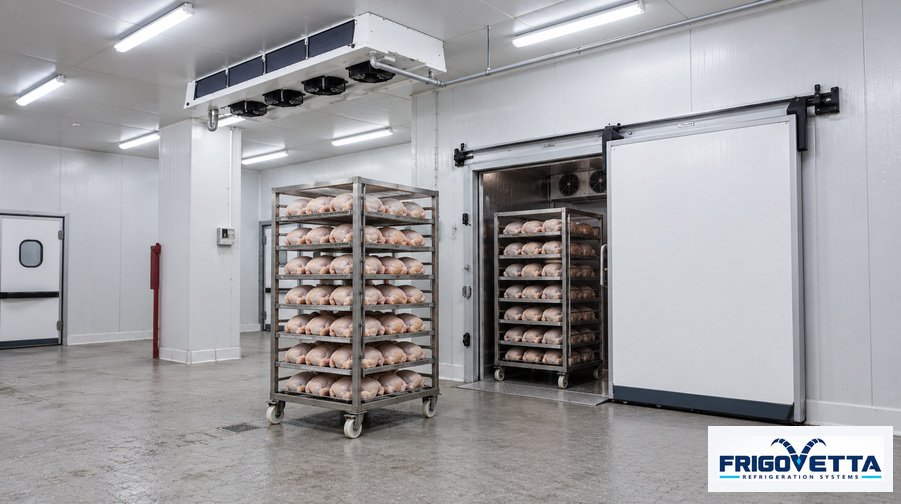
Film, liners, cartons and trapped air influence heat transfer. Pack dimensions and fill weights therefore belong in the design brief for blast freezer refrigeration systems, alongside the arrangement of products on racks or trolleys.
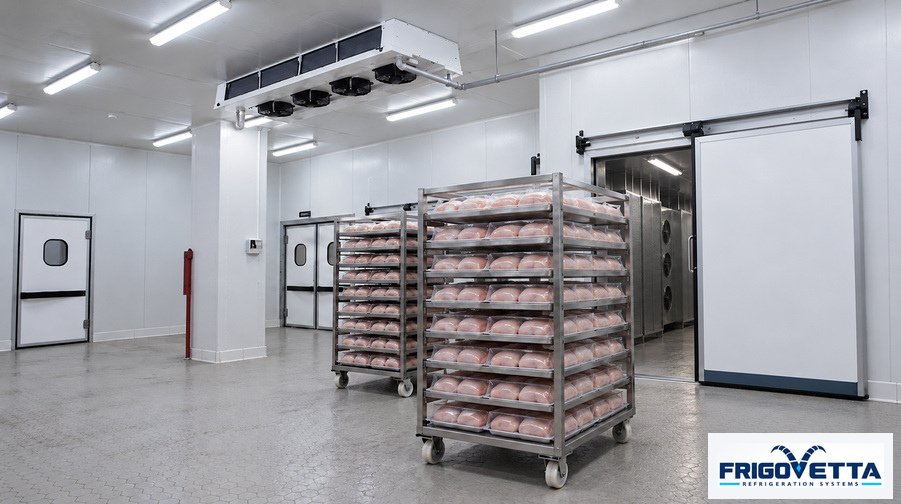
Air needs to reach the intended surfaces throughout the batch. Cold room evaporators selected for blast-freezing duty must work with the specified gaps, loading positions and any air guides. A change to deeper cartons, tighter stacking or larger birds can alter performance even when total batch weight remains unchanged.
Loading instructions should make the approved arrangement easy to reproduce. Apparent spare space must not be filled if doing so blocks an air channel.
Verify Each Product Programme
The freezer’s air-temperature display cannot confirm that the centre of every bird or pack has reached the required condition. Commissioning trials should establish representative slow-cooling positions and suitable product measurement points for the intended formats.
Records should identify the product group, loading arrangement, starting conditions and completion checks. A successful cycle for one chicken weight range does not automatically establish a suitable programme for larger turkeys. Calibrated measuring equipment and product-temperature checks support the processor’s release procedures.
Freezing remains a preservation step. Poultry entering the room must already meet the site’s acceptance and hygiene requirements.
Coordinate Waiting and Transfer
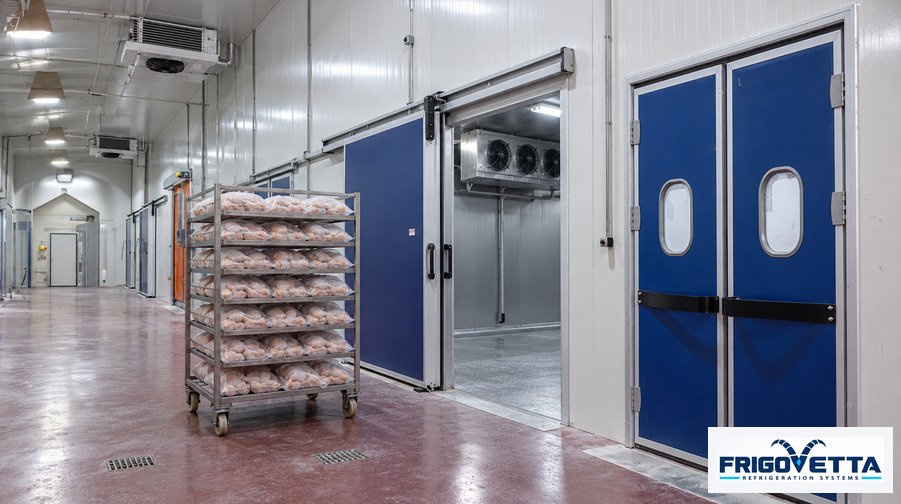
The complete route runs from packing through any necessary chilled waiting area, into an available freezing room and finally to a prepared frozen storage position. A delay at the last stage can prevent the next batch from entering, even when the refrigeration equipment has completed its work.
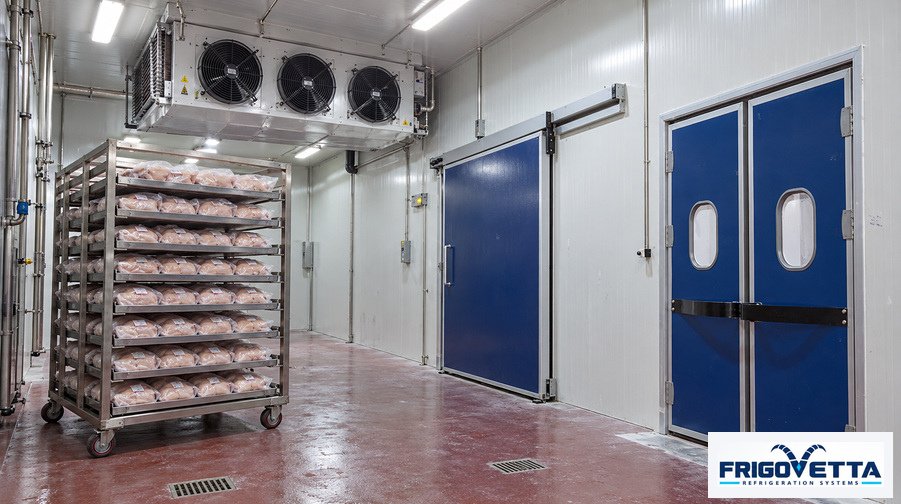
Planning should include loading, unloading, cleaning and defrost time, together with the permitted holding conditions before freezing. Sliding cold room doors specified for freezer service need suitable clearances, sealing, heating and internal release provisions. Cold room panels, floor insulation and vapour-control details must suit the operating conditions.
Define the Installation
Frigovetta’s turnkey cold storage solutions coordinate the freezing rooms, refrigeration and agreed controls with the surrounding operation. The proposal should establish both the batch duty and the space required to move products through it.
Provide bird weight ranges, portion formats, packaging details, incoming temperatures and the required frozen condition. Add the packing schedule and available storage positions so that the installation can be planned around the poultry products actually handled.
Galeri