Poultry Cutting Room Refrigeration
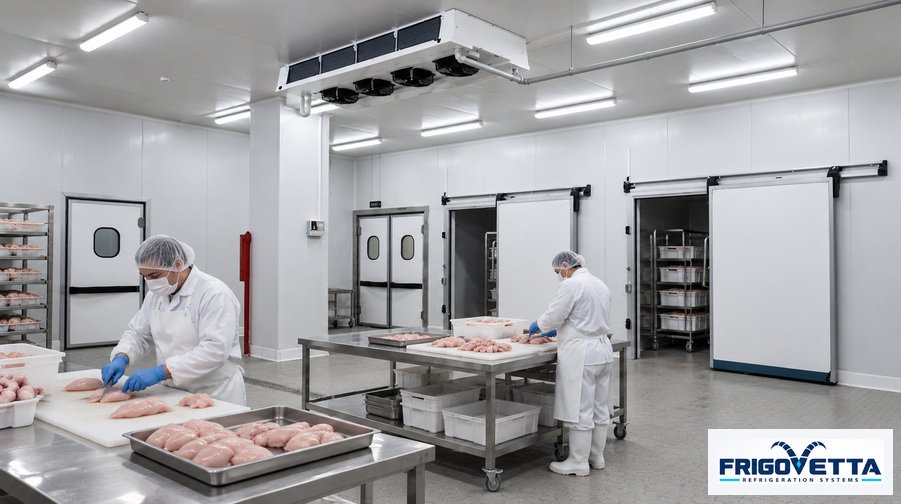
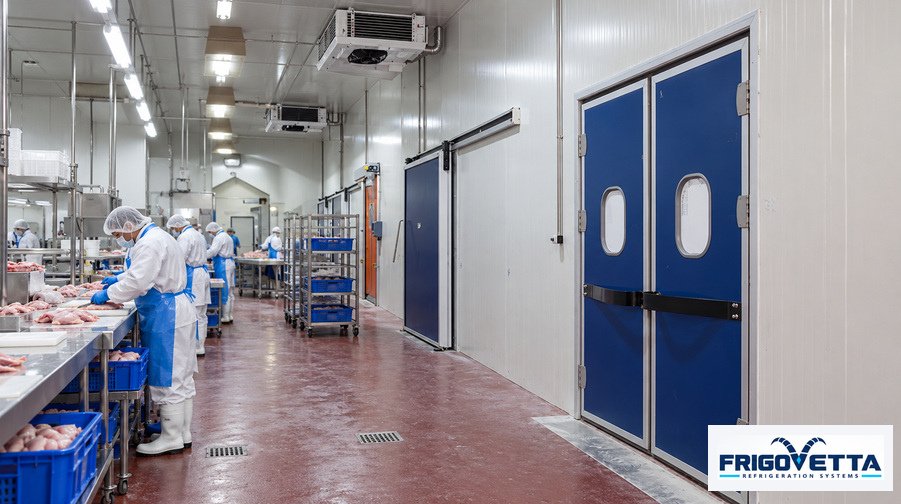
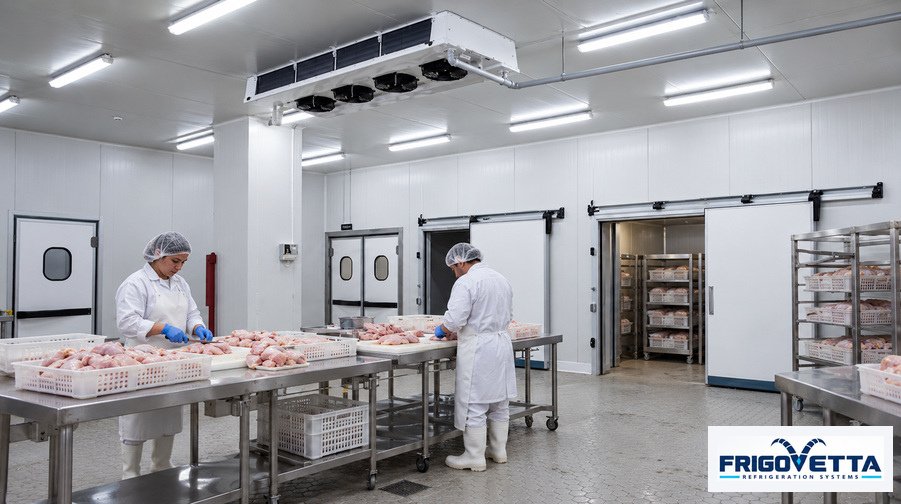
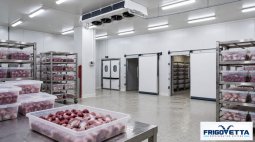
Poultry cutting room refrigeration supports controlled conditions while chilled birds are deboned, trimmed and divided into portions. A line producing breast fillets, wings and legs does not always move every cut at the same speed. Cooling and room layout need to accommodate these uneven flows, particularly where products wait between cutting, weighing and packing.
Frigovetta Refrigeration System designs, manufactures and installs refrigerated processing rooms within its poultry cold storage projects. The room enclosure, refrigeration and transfer points are coordinated with the customer’s cutting equipment, staffing levels and production schedule.
Follow Each Product Stream
The number of birds entering the line gives only part of the operating picture. Breast meat may move directly to packing while wings or trim accumulate in containers for a later order. These separate streams determine where chilled space is needed and how much product can be present at one time.
The design brief should identify these waiting points, including the arrangements used during grading checks or equipment stoppages. A defined route back to suitable chilled holding helps prevent production tables becoming unplanned storage areas. Allowable waiting times and product conditions must follow the processor’s validated procedures.
Account for Equipment and People
A cutting room gains heat from occupants, lighting, motors, incoming products and air entering through openings. The relevant equipment load depends on what operates inside the refrigerated space and for how long. An equipment list should therefore include operating schedules as well as installed power ratings.
Cold room refrigeration systems are selected against the combined operating load and the required room conditions. Capacity assessment should cover the busiest planned shift, while controls also need to suit quieter periods. Ventilation requirements must be assessed separately and included in the overall design; circulating refrigerated air does not itself provide fresh air.
Distribute Air Around the Line
Conveyors, guards and overhead services can alter air movement once a room is fitted out. An empty-room test cannot fully demonstrate how cooling will reach the occupied production area. Equipment positions and access routes should be available when the refrigeration layout is developed.
Cold room evaporators selected for processing areas should provide suitable air distribution with reduced draught at fixed workstations. Cold air should not be concentrated on operators or exposed product at a single point. Cleaning access, sound levels and condensate management also need consideration when choosing and positioning the units.
Keep Containers Moving Cleanly
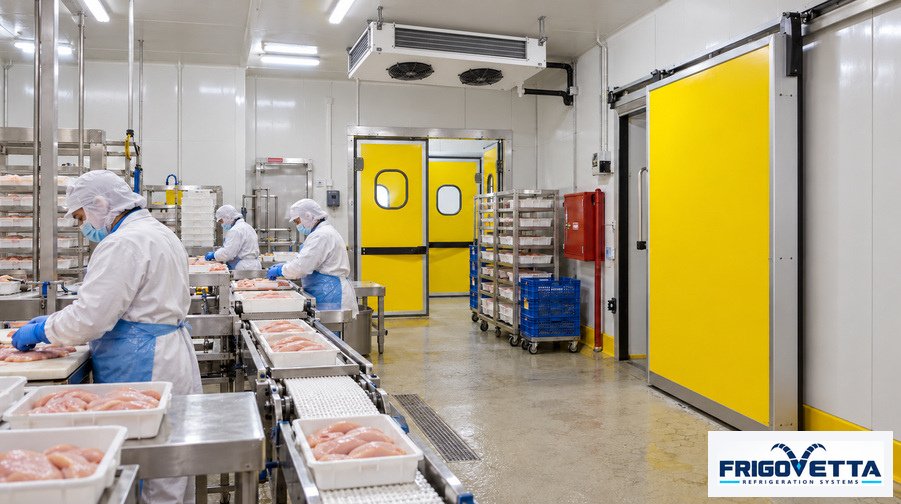
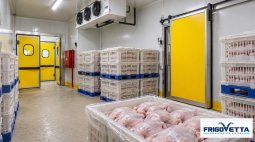
Portioning creates frequent movements of tubs, trays and trolleys between workstations. Full containers, empty returns and materials awaiting washing should have defined routes that protect exposed chicken and turkey from contamination. Space for these movements is part of the room layout, rather than spare capacity to be filled later.
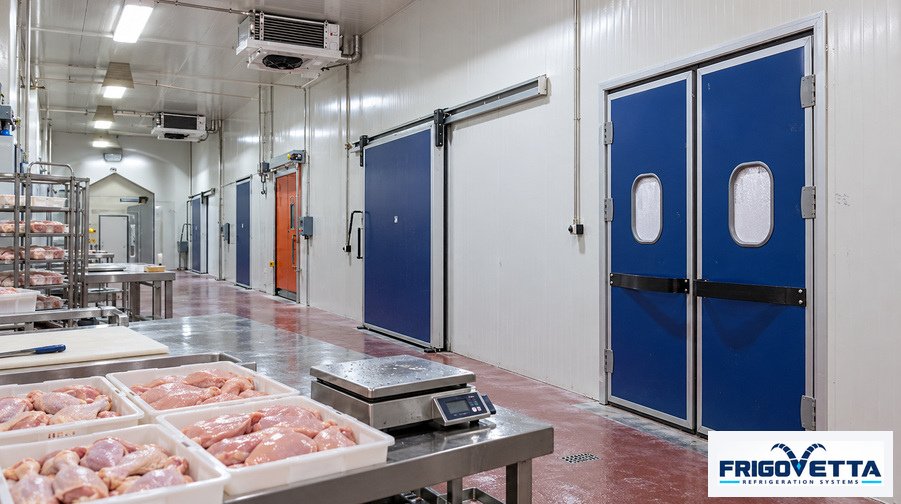
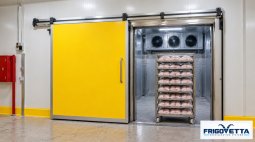
Automatic sliding cold room doors can serve repeated transfers where controls and clearances suit the traffic. Door placement should support the site’s hygiene zoning. If cooked or ready-to-eat products are handled elsewhere in the facility, their separation requires specific controls beyond simply assigning a different workbench.
Plan the End of the Shift
Cleaning access becomes difficult when conveyors sit too close to walls or services conceal surfaces that need inspection. The room design should be coordinated with the processing-equipment layout before installation, leaving the required maintenance and sanitation clearances.
Cold room panels and their joints must suit the specified cleaning method. Drainage, floor junctions and service penetrations need compatible detailing. Cleaning introduces heat and moisture, so the restart plan should allow the room to return to its required condition before product handling resumes, alongside the site’s hygiene release checks.
Connect Cutting With Packing
Define the handover from cutting to packing, including batch identification, responsibility for waiting products and the required temperature checks. Room temperature records alone cannot establish the temperature of every container of portions.
Frigovetta’s turnkey cold storage solutions coordinate these refrigerated spaces and their agreed interfaces. For a proposal, share the line layout, product mix, staffing, equipment loads and packing schedule. This allows the refrigeration project to follow the movement of poultry through the working day.
Galeri