Chicken Cold Storage
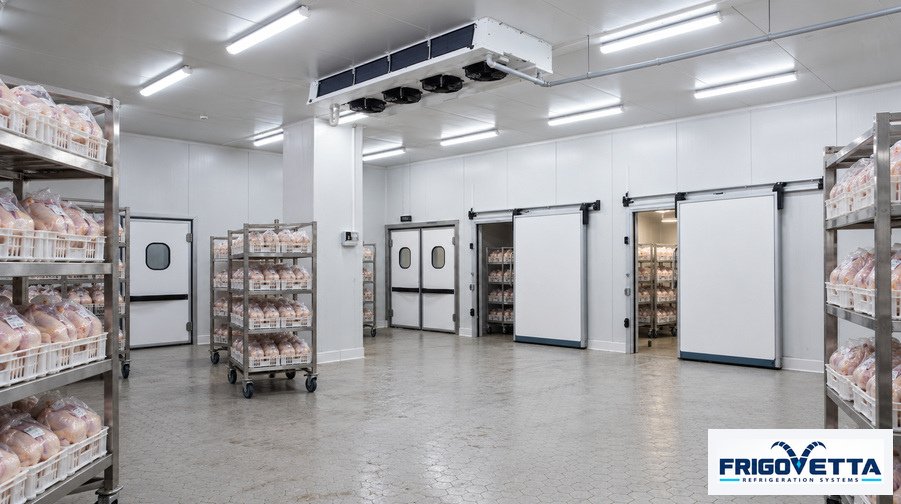
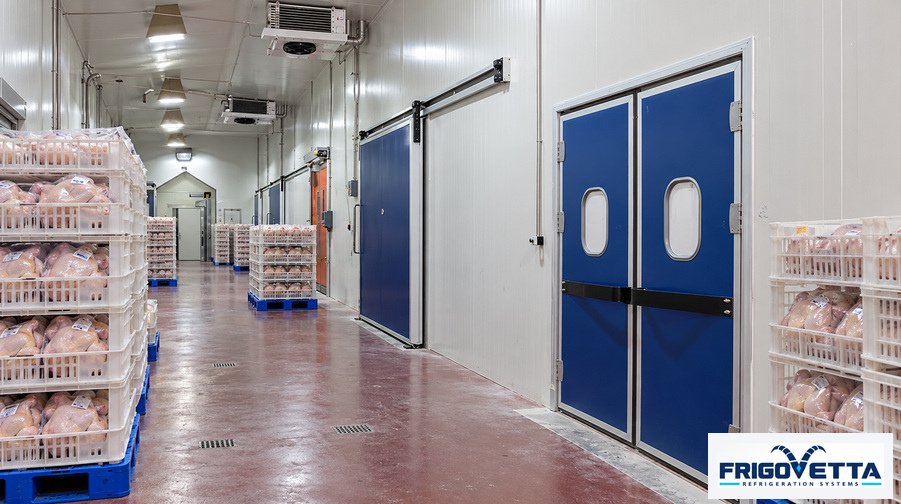
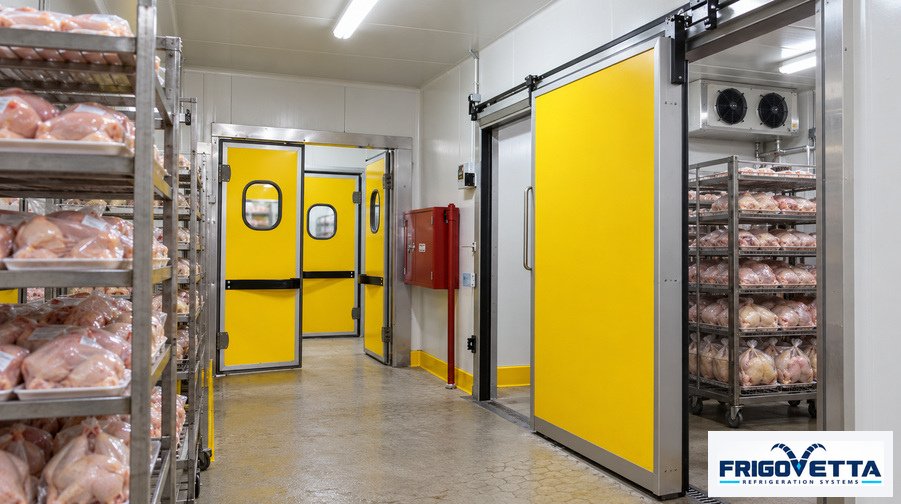
Chicken cold storage provides refrigerated space for whole birds, portioned cuts and packed chicken awaiting processing or dispatch. A facility handling breasts, wings, legs and whole birds may receive products continuously while assembling orders with a different mix of cuts. The room must accommodate both movements without turning access aisles into temporary holding areas.
Frigovetta Refrigeration System designs, manufactures and installs chicken storage rooms within its poultry cold storage projects. Each installation is planned around the products received, their condition on arrival and the quantities moving through the facility during a working day.
Define the Incoming Product
A store receiving chicken after primary chilling has a different duty from equipment used to cool birds immediately after slaughter. The refrigeration brief should identify that boundary, including expected product temperatures and any further cooling required before packing or dispatch.
Whole birds, loose portions in containers and sealed retail packs also need different handling arrangements. Record the actual crate dimensions, pack sizes and delivery pattern before calculating storage positions. Cold room refrigeration systems can then be selected for the agreed load, rather than on room volume alone.
Keep Product Groups Accessible
An order may require several cuts taken from different batches. If every product is buried behind full stacks, picking takes longer and staff may leave other goods outside the room while searching. Dedicated locations for frequently requested cuts can reduce this unnecessary handling.
Capacity planning should include room for receiving checks, order assembly and stock awaiting a decision. These positions should remain identifiable, with records linking the physical load to its batch and release status. The layout must also keep raw chicken separate from cooked or ready-to-eat products according to the site’s hygiene requirements.
Plan Around the Actual Crates
Stackable crates can look orderly while leaving limited space for air to circulate around the load. Their shape, fill level and stacking arrangement need to be considered together. Substituting taller containers or increasing the amount in each crate can change the conditions within a previously assessed storage layout.
Cold room evaporators should distribute cooling across the intended positions, with clear supply and return air paths. Product checks should complement room monitoring where required by the operating procedures. A satisfactory reading at one wall does not establish the condition of every crate in a full room.
Where exposed chicken or containers can release liquid, placement must prevent drips from contaminating other products or packaging. Suitable containers, controlled handling and accessible cleaning areas are part of this arrangement.
Protect the Packing Interface
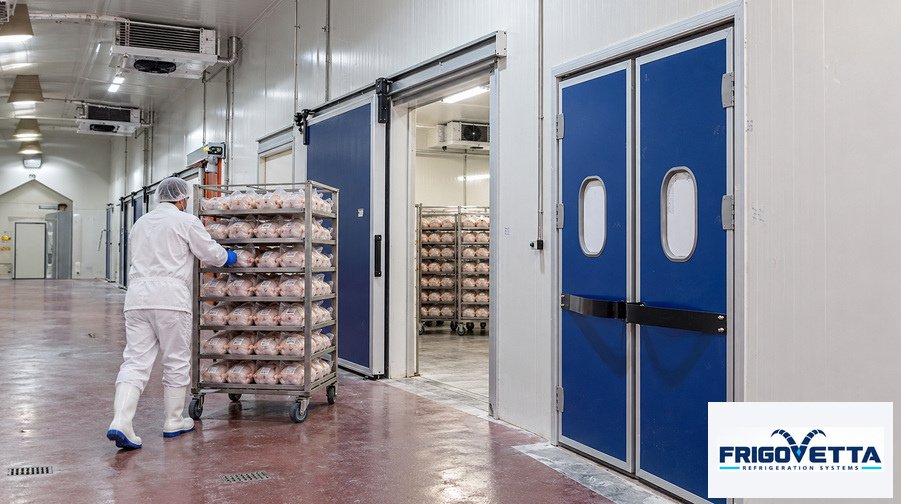
Storage and packing often work at different speeds. A temporary packing stoppage can leave more chicken waiting than the normal production plan allows. A defined chilled buffer gives the operation somewhere suitable to hold that stock without blocking the receiving route.
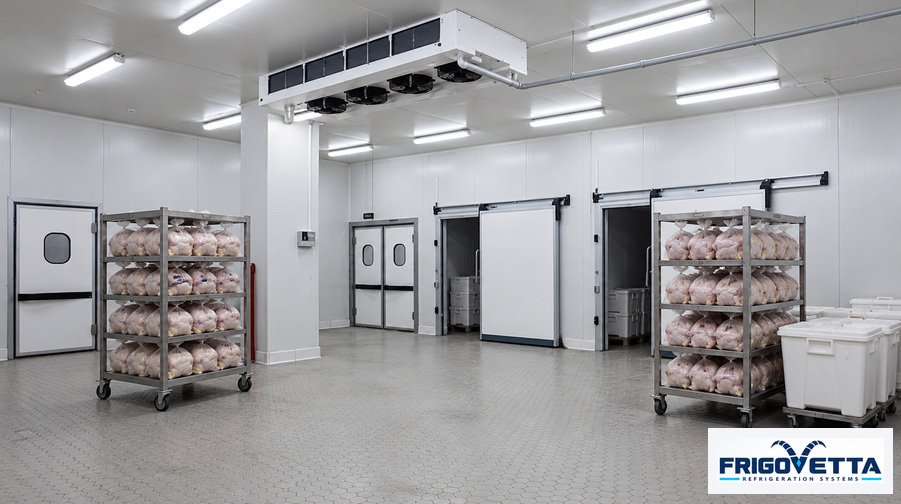
Automatic sliding cold room doors may suit repeated trolley transfers when the opening controls and clearances match the traffic. Their position should support a short, practical route between storage and packing. Finished packs need protection from contact with returned crates and equipment used for unpackaged raw products.
Make Cleaning Practical
Cleaning plans should cover floor edges, door thresholds and the spaces beneath storage equipment. These areas need access for inspection and cleaning, even when the room is busy. Containers awaiting washing should follow a route that protects clean stock.
Cold room panels and their junctions should be specified for the cleaning conditions. Where stainless steel cold room shelving is used for smaller containers or order assembly, its load rating, shelf spacing and cleanability must suit the application. Surface material alone does not determine whether the installation can be cleaned effectively.
Match Storage to Dispatch
The required holding conditions and permitted storage period depend on the product, packaging and applicable market requirements. Plan stock rotation around the relevant dates and release instructions, with picked orders kept under suitable temperature control until loading.
Frigovetta’s turnkey cold storage solutions coordinate the room, refrigeration, access and agreed monitoring arrangements. Provide the daily product mix, peak inventory, crate or pallet dimensions and packing schedule to develop a proposal that reflects the operation’s busiest periods.
Galeri