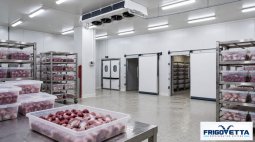
Frozen Poultry Storage
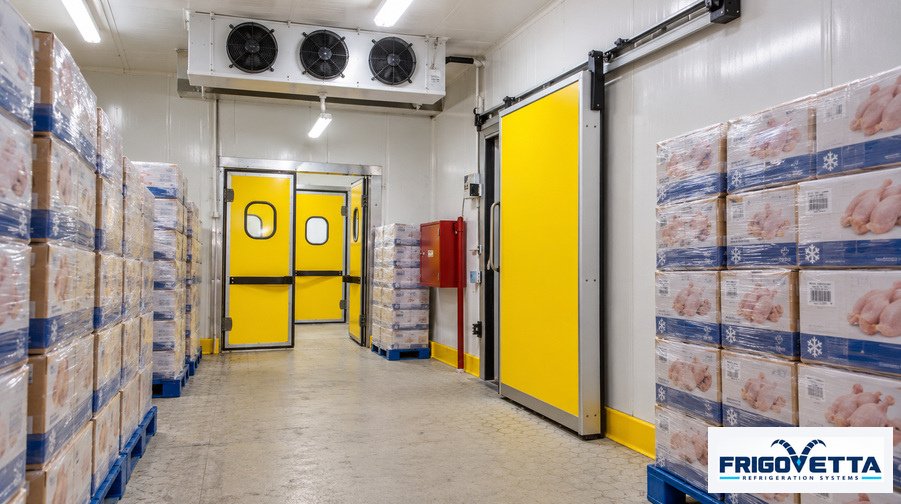
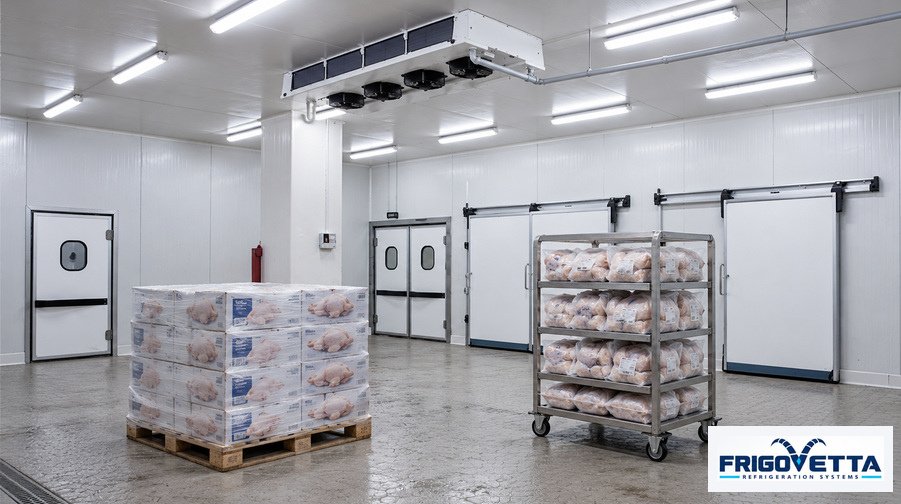
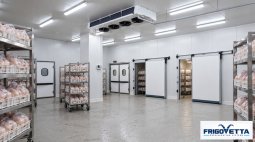
Frozen poultry storage keeps chicken and turkey under specified frozen conditions between production and distribution. Whole birds, cartons of portions and boxed boneless meat may leave the same warehouse in very different orders. The storage plan needs to protect the product while allowing staff to retrieve the right format, weight range and batch without repeatedly rearranging surrounding stock.
Frigovetta Refrigeration System designs, manufactures and installs frozen warehouses and holding rooms within its poultry cold storage projects. Each installation is planned around the inventory, order profile and movement of goods through the facility.
Receive Products Ready for Storage
The receiving process should establish that incoming poultry meets the site’s frozen-product specification. A cold outer carton does not, by itself, demonstrate the condition throughout the load. Temperature checks, transport records and packaging inspection should follow the agreed acceptance procedures, with a defined location for goods awaiting a decision.
The holding room should not be used to complete an unfinished freezing cycle unless it has been specifically designed and validated for that duty. Cold room refrigeration systems are selected around the incoming product conditions, storage requirements and operating load. Frozen poultry is commonly held at −18°C or below, with the actual specification determined by the product and destination market.
Locate Stock by Order Type
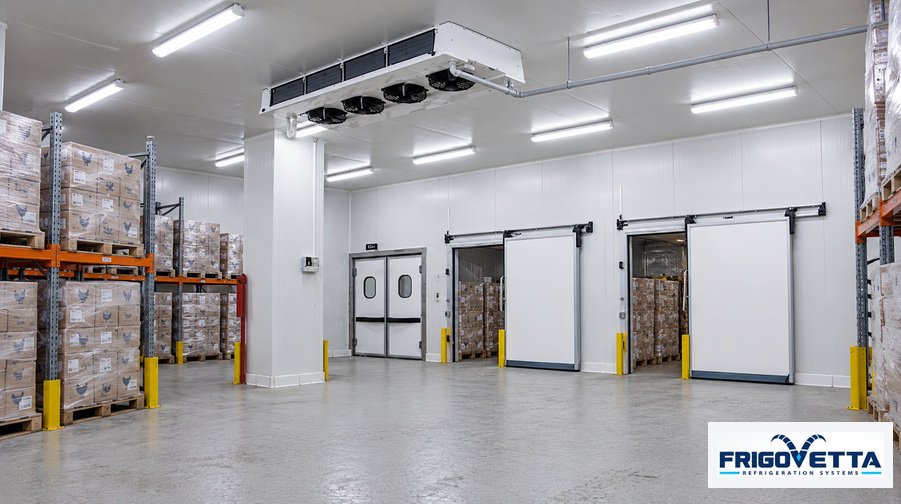
A distributor supplying full pallets has different access needs from one assembling mixed orders of wings, breast meat and whole birds. Product locations should reflect those picking patterns. Frequently requested lines need accessible positions, while reserve stock can be arranged around replenishment movements.
Whole-bird weight grades and pack sizes should remain identifiable after pallets enter the racks. Batch records need to distinguish stock available for dispatch from goods held for inspection or customer allocation. The maximum inventory calculation must include the positions needed for these activities, rather than treating every clear floor area as storage space.
Preserve Packaging During Picking
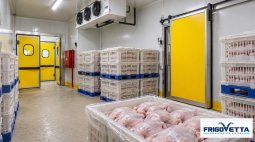
Repeated case picking exposes cartons and inner packs to handling that an untouched pallet does not experience. Wrapping can catch on rack edges, while unstable stacks can crush lower cartons. Handling clearances and suitable picking positions help reduce these sources of damage.
Packaging is also part of the product’s protection against moisture loss during frozen storage. Damaged bags or loose wrapping can leave surfaces more exposed to dehydration. Inspection and stock-control procedures should address affected packs before dispatch. Stable cold conditions support quality preservation, but do not create an unlimited commercial storage life.
Plan for Changing Occupancy
The room may be nearly full before a major dispatch period and much less occupied afterwards. Both conditions belong in the operating assessment. A layout that performs adequately with a few pallets may behave differently when reserve positions and upper rack levels are occupied.
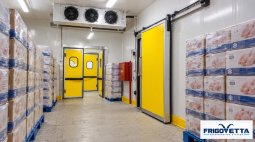
Cold room evaporators should serve the intended loading arrangement, with supply and return air paths kept clear. Monitoring locations should reflect the storage layout and potential temperature variations. Defrost and alarm settings need to suit the installation, with clear procedures for investigating deviations and assessing affected products.
Control the Transfer Area
Order assembly should not leave picked poultry waiting in a warm loading area. Where operations require a staging space, its temperature conditions and permitted dwell time should be specified for the products handled. Vehicle readiness and loading sequence should be coordinated before orders leave controlled storage.
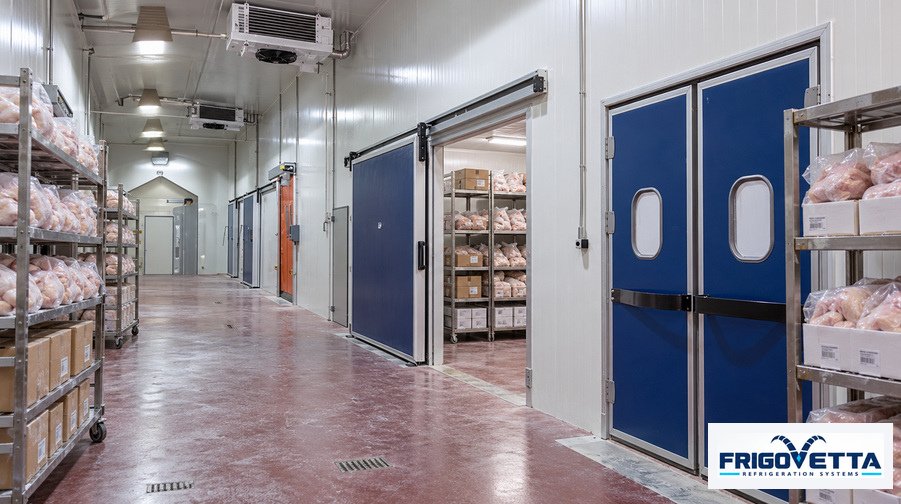
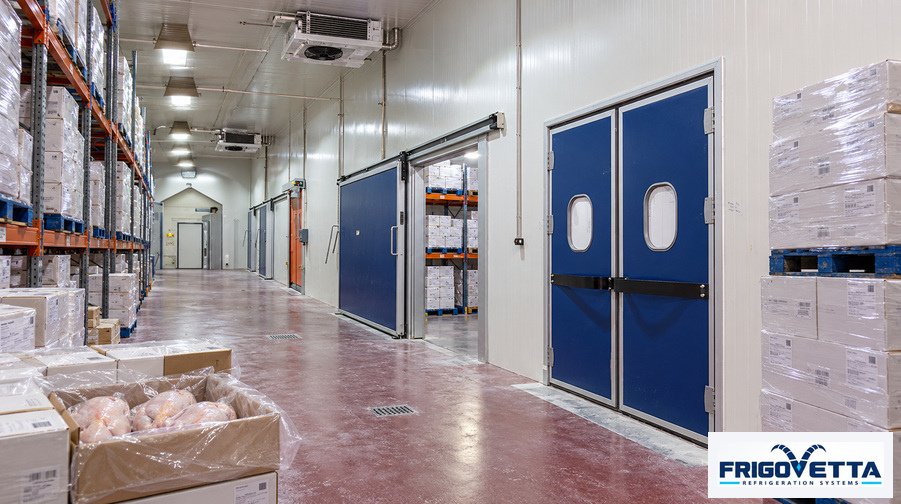
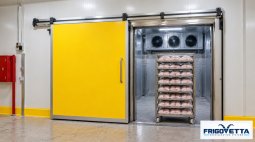
Automatic sliding cold room doors configured for freezer service can support repeated movements when their opening controls, seals and heating arrangements match the application. A suitably designed ante-room may help limit warm, humid air entering the freezer. Its effectiveness also depends on door operation and traffic management.
Define the Warehouse Installation
Cold room panels, junctions and penetrations need insulation and vapour-control detailing suited to frozen operation. Floor construction must account for rack and vehicle loads, with subfloor frost protection assessed where applicable. Access for inspection and maintenance should remain practical after the warehouse is stocked.
Our turnkey cold storage solutions are planned around reserve pallets, case-picking positions and dispatch staging. Share pallet dimensions, product formats, peak inventory and typical order sizes when requesting a proposal. These details establish how the warehouse will support both bulk storage and daily dispatch.
Galeri