Berry Cold Storage
Berry Cold Storage
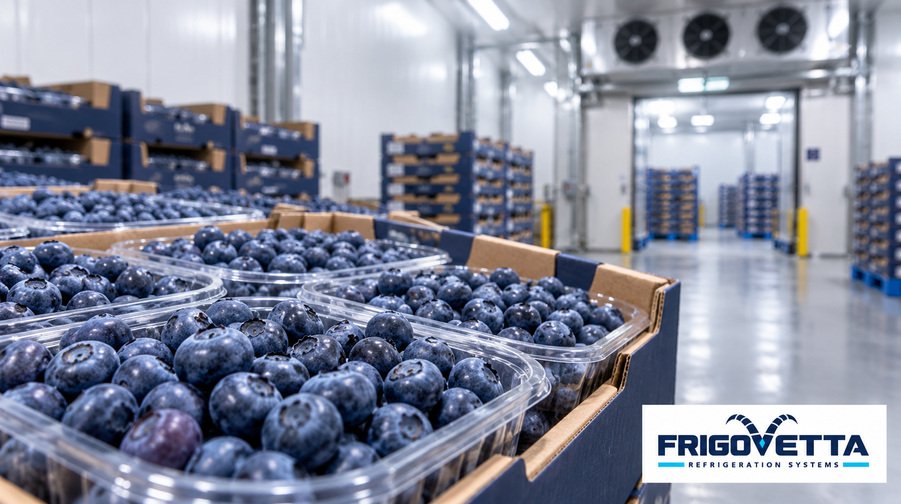
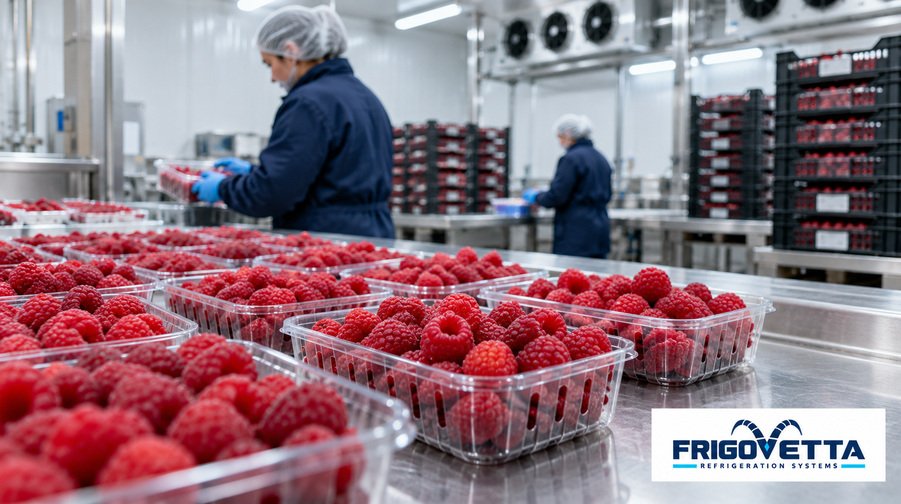
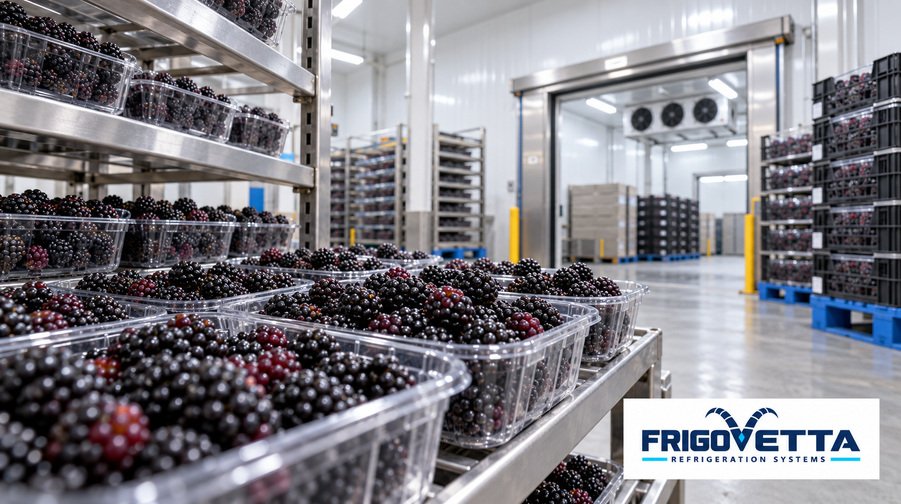
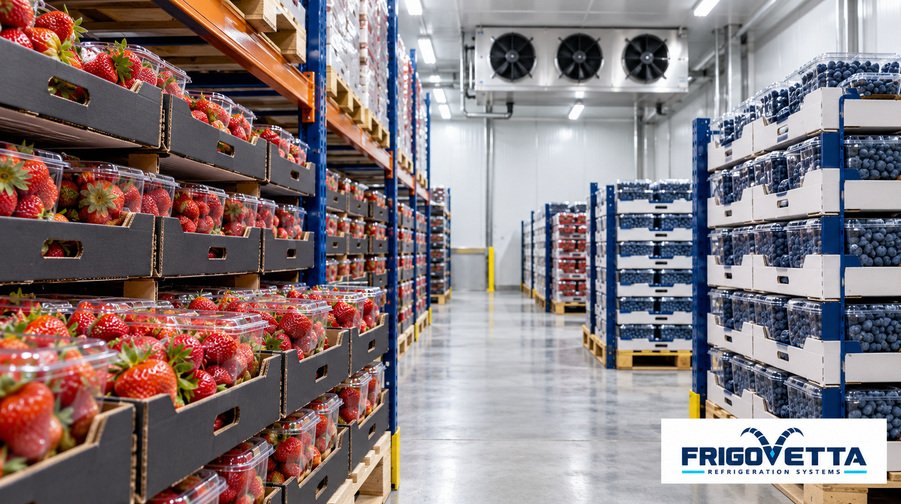
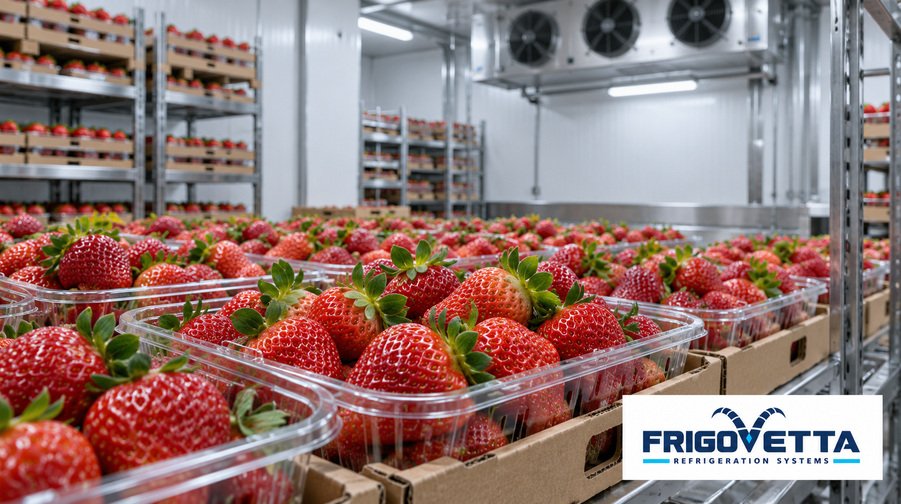
Berry cold storage starts with the pack as much as the room. A tray of strawberries, a punnet of raspberries and a carton of blueberries can respond differently to cooling, depending on fruit condition, packaging ventilation and how the load is stacked. The facility needs to bring fruit into its intended storage conditions while keeping fragile packs accessible for the next order.
Frigovetta Refrigeration System designs, manufactures and installs berry cooling and storage facilities for growers, packers and fresh produce distributors. These fruit cold storage projects connect incoming harvests, packaged stock and customer collections through a layout suited to short, closely managed storage cycles.
Packaging Shapes the Cooling Process
Berry packaging protects the fruit, but it also influences how heat leaves the load. Vent openings in punnets and outer cartons need to work together. Blocked openings or unsuitable wrapping can restrict airflow, leaving some packs cooling more slowly than others.
Where forced-air precooling is selected, the arrangement must draw air through the packages rather than allow it to bypass them. This requires a planned airflow path and suitable packaging, not simply a larger fan inside a storage room. The refrigeration duty is assessed against incoming fruit temperature, batch size and the agreed cooling schedule.
Storage Matched to Each Berry
Strawberries need prompt cooling and careful temperature management to help limit deterioration. Cooling does not make damaged or decaying fruit suitable for storage, so intake inspection and removal of unsuitable packs remain important operating steps.
Raspberries and blackberries are particularly delicate and generally have a shorter storage window than blueberries. Their location in the room should support timely dispatch with minimal rearrangement. Blueberries can suit a different holding programme, but variety, harvest condition and the customer’s delivery requirements still determine the plan.
Room assignments therefore follow the actual product mix. Compatible batches may share a chamber, while separate spaces can support different turnover rates or operating conditions without repeatedly disturbing other stock.
Moisture Without Surface Wetness
Reducing moisture loss helps maintain berry appearance and saleable weight. However, high relative humidity is different from water collecting on fruit or packaging. Cold packs exposed to warm, humid air can develop condensation during transfers.
The project assessment considers moisture management alongside temperature control. Cold room evaporators, fan operation and defrost arrangements are coordinated with the required room conditions. Door locations and the route between storage and order preparation also influence how often chilled packs encounter warmer air.
Space for Picking and Dispatch
A berry facility may handle small mixed orders alongside full pallets. Providing access to individual batches can prevent staff from moving several loads to reach one requested product. Clearly arranged positions also support stock rotation based on product condition and remaining market life.
Where the workflow requires frequent transfers, automatic sliding cold room doors can be considered with suitable controls and a clear opening matched to the handling equipment. Cold room panels enclose the chilled areas, while the layout leaves practical access for cleaning, inspection and servicing.
Defining the Project Scope
Our turnkey cold storage solutions bring together the insulated rooms, refrigeration equipment, doors and controls within the agreed project scope. Cooling performance should be assessed using representative fruit temperatures as well as room-air readings.
For a project proposal, provide the berry types, pack formats, peak arrivals, expected holding times and order-picking pattern. These inputs establish the cooling capacity and usable layout needed for the daily operation.
Galeri